
How do you build a persuasive immigration case when the file gives you a timeline but not the client's inner life?
Chronology matters. So do entries, removals, separations, arrests, diagnoses, and country conditions. But case strength often turns on details that standard intake misses: how chronic fear shapes memory, how children become interpreters and caretakers, how secrecy alters testimony, and how resilience can coexist with impairment.
Books about immigration experience help fill that gap. In practice, I use them as working tools, not background reading. A well-chosen narrative can sharpen affidavit drafting, improve psychosocial interviews, and give attorneys and clinicians better language for cumulative trauma, shame, family rupture, adaptation, and loss. It can also show where a client's presentation may be misunderstood if the evaluator or legal team reads silence as inconsistency rather than survival.
The strongest titles also serve different case functions. Some are especially useful for asylum and withholding matters because they clarify how fear, displacement, and fragmented recall appear in lived experience. Others help with cancellation, hardship waivers, SIJS, or psychological evaluations by showing developmental disruption, parent-child role reversal, educational loss, and the long tail of instability.
The seven books below earn a place in professional workflow for different reasons. They are not interchangeable, and that is the point. Each one offers a distinct lens that can help legal and clinical teams ask better questions, document harm more precisely, and present a client's story with greater accuracy and force.
Table of Contents
- 1. The Undocumented Americans
- 2. Dear America
- 3. Beautiful Country
- 4. The Distance Between Us
- 5. Enrique's Journey
- 6. The Newcomers
- 7. Tell Me How It Ends
- 7-Book Comparison: Immigration Narratives
- From Reading to Practice Integrating Narrative into Your Workflow
1. The Undocumented Americans
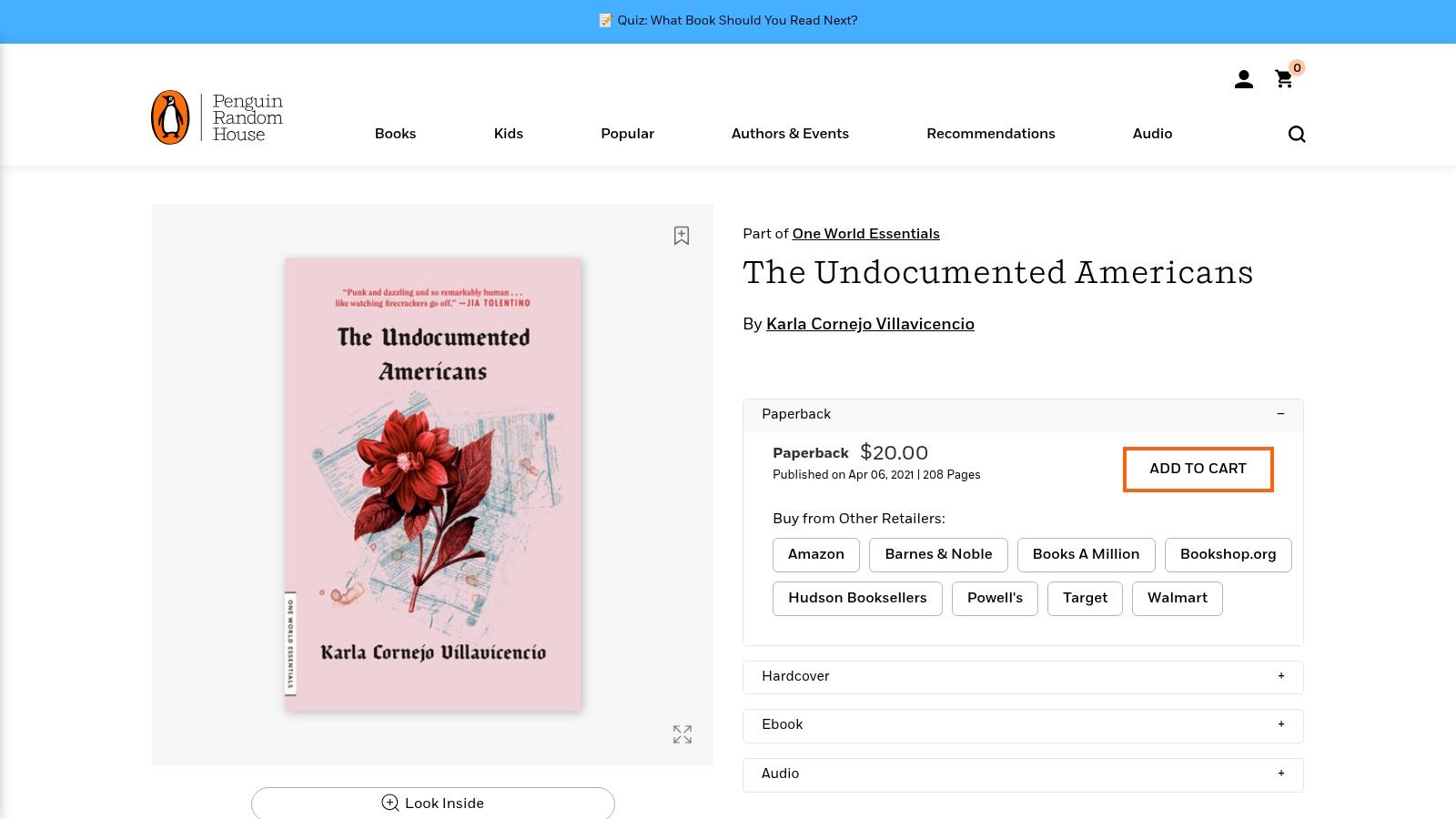
Karla Cornejo Villavicencio's The Undocumented Americans is one of the best books about immigration experience for practitioners who are tired of thin, policy-only portraits of undocumented life. It stays close to labor, illness, family obligation, and invisibility. That matters because many declarations fail when they overemphasize a single event and miss the slow accumulation of strain.
For psychological evaluations, this book is especially useful when a client minimizes suffering because survival has become normal. The writing gives attorneys and clinicians better language for cumulative trauma, bodily wear, and functional endurance. It also helps separate dignity from idealized victimhood. Many clients don't present as broken. They present as overadapted.
Where it helps in practice
Use this book when you're building affidavits or psychosocial sections for clients whose stories don't fit a familiar public script. It's particularly strong for older workers, mixed-status families, and people whose harm shows up through exhaustion, chronic fear, and exploitation rather than one dramatic episode.
- Affidavit drafting: Pull from its observational style when helping clients describe routine fear, unsafe work, and the logic of silence.
- Clinical interviewing: It can help evaluators ask better questions about somatic symptoms, work injury, and trauma that never received formal treatment.
- Team calibration: Junior staff often overfocus on legal categories. This book pulls them back to lived experience.
Practical rule: If a client says, “Nothing happened, I just worked,” that's often the beginning of the real narrative, not the end of it.
The trade-off is structure. This is an essayistic, nonlinear book. Some readers will find that fragmentation harder to cite mentally than a chronological memoir. And because some scenes are intense, I wouldn't hand it to every client without screening for readiness.
2. Dear America
Jose Antonio Vargas's Dear America: Notes of an Undocumented Citizen works well when you need a clean, accessible account of undocumented identity under chronic secrecy. It's direct. It names the pressure of passing, the instability of belonging, and the psychological cost of living as if one wrong disclosure could rearrange your life. For legal teams, that clarity is useful.
I often think of this as a training-text book. It's not the broadest portrait of undocumented life, but it's one of the easiest to assign across attorneys, case managers, clinicians, and even community partners. If your office is trying to understand the hidden emotional load behind a “functional” client, this is a strong place to start. It pairs naturally with clinical thinking about mental health and immigration, especially when a client appears successful on paper yet reports sleep disruption, hypervigilance, and identity strain.
Best use case
This is the book I'd hand to a team preparing cases where the record risks understating harm because the client stayed employed, achieved academically, or developed a polished public-facing identity. It helps explain why outward competence doesn't cancel internal distress.
Its limitations are also clear. Vargas writes from the vantage point of a nationally known journalist. That perspective brings visibility and rhetorical force, but it won't map neatly onto low-wage labor, recent arrival, detention history, or unaccompanied-child experiences.
Good legal writing often fails when it treats secrecy as a background fact instead of a daily organizing condition. This book corrects that mistake.
If you use books about immigration experience in workshop settings, this one tends to generate the fastest discussion because the prose is straightforward and the psychological themes are easy for non-clinicians to recognize.
3. Beautiful Country
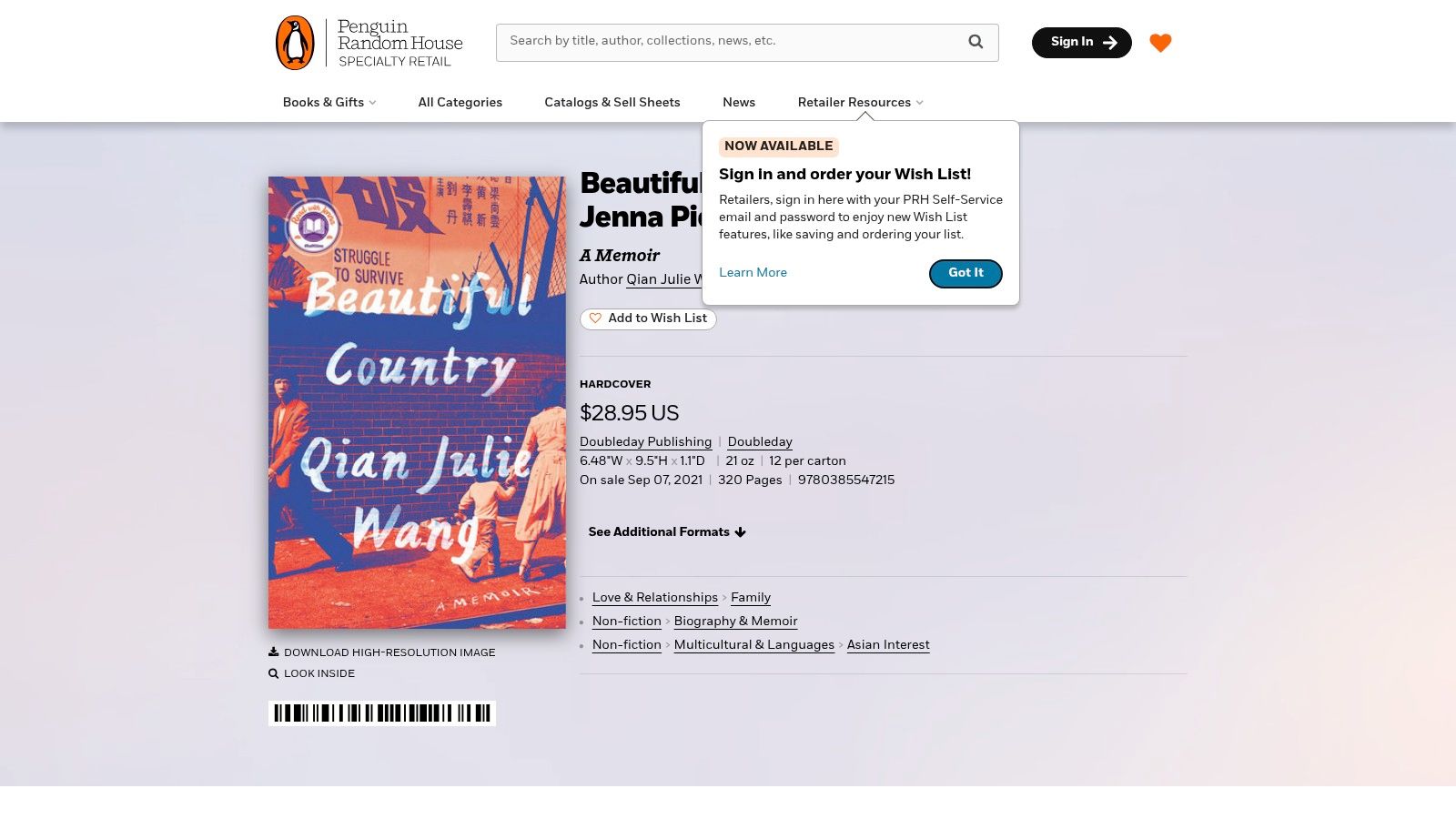
Qian Julie Wang's Beautiful Country is one of the most practically useful books about immigration experience when the central issue is childhood. It captures what undocumented life feels like from a child's perspective without reducing the family to symbols. Hunger, fear, school pressure, secrecy, and caregiver stress all appear as developmental conditions, not just background hardship.
That distinction matters in practice. When attorneys are building hardship narratives involving U.S. citizen children, derivative trauma, or histories of instability inside the home, this memoir offers a better model than generic references to “stress.” It shows how children absorb legal precarity through routines, language, and the moods of adults.
Why clinicians should read it
For evaluators, the value is in how clearly the book maps environment to development. Children rarely describe acculturation stress in formal terms. They talk about embarrassment, confusion, food, silence, and the rules they learn not to break. Wang's memoir helps translate those small details into coherent psychosocial findings, especially where acculturation stress interacts with poverty, undocumented status, and parent-child role shifts.
- Hardship waivers: Useful for showing how caregiver instability affects a child's emotional world.
- School impact summaries: Strong for educational narratives involving fear, concealment, and achievement under pressure.
- Intergenerational analysis: Helps explain how parents' legal vulnerability reorganizes family functioning.
The caution here is context. The memoir is rooted in one city and one period. Practitioners should use it as a lens, not a template. Don't borrow its details wholesale for clients in rural settings, newer policy environments, or very different cultural contexts.
4. The Distance Between Us
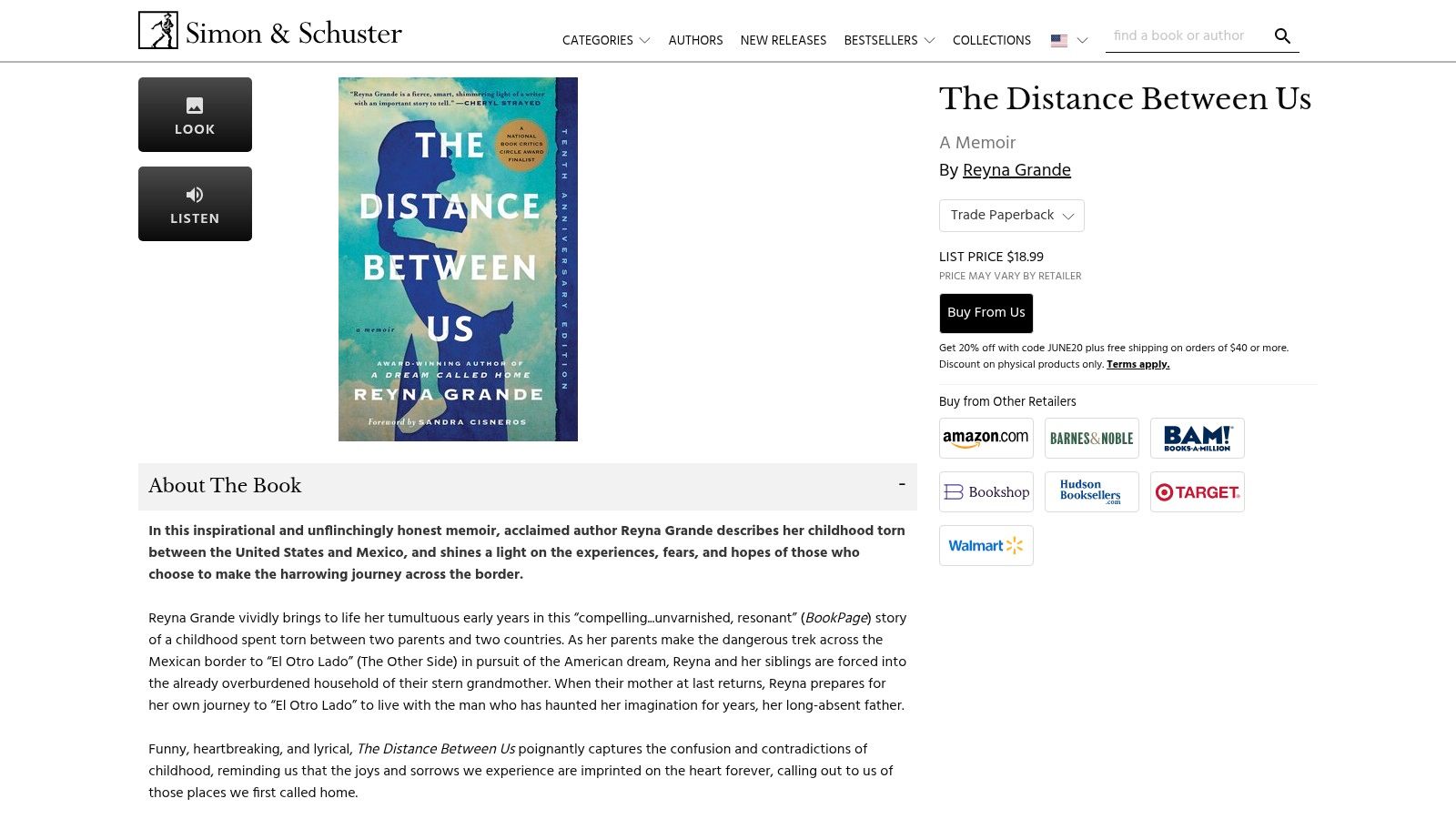
Reyna Grande's The Distance Between Us does something many practitioners need and few books provide. It gives a chronological account of separation, migration, reunification, and adaptation. That makes it especially strong for attorneys who need clean temporal sequencing when drafting declarations or preparing testimony.
This is the book I'd use with newer staff who struggle to connect attachment disruption to later functioning. Grande makes clear that reunification isn't the end of trauma. It can introduce a second wave of confusion, resentment, guilt, and dislocation. In case preparation, that's a critical point. Some records wrongly frame family reunification as a purely positive turning point.
Why the chronology matters
Chronology helps in both legal and clinical settings. It allows practitioners to identify where symptoms likely began, where they intensified, and how separation altered family roles over time. That's valuable in hardship narratives, asylum-related psychosocials, and cases involving prolonged parent-child disruption.
This memoir also balances adversity with resilience. That's useful because adjudicators often respond better to narratives that sound human rather than curated for maximum damage.
Reunification can be destabilizing. If a case history treats it as uncomplicated relief, look again.
The limitation is scope. The memoir is firmly grounded in a Mexico-U.S. family story. Its emotional architecture travels well, but its geographic and political specifics won't always transfer to other migration routes or forms of displacement. It also doesn't spend much time on adult employment systems or legal process itself.
5. Enrique's Journey
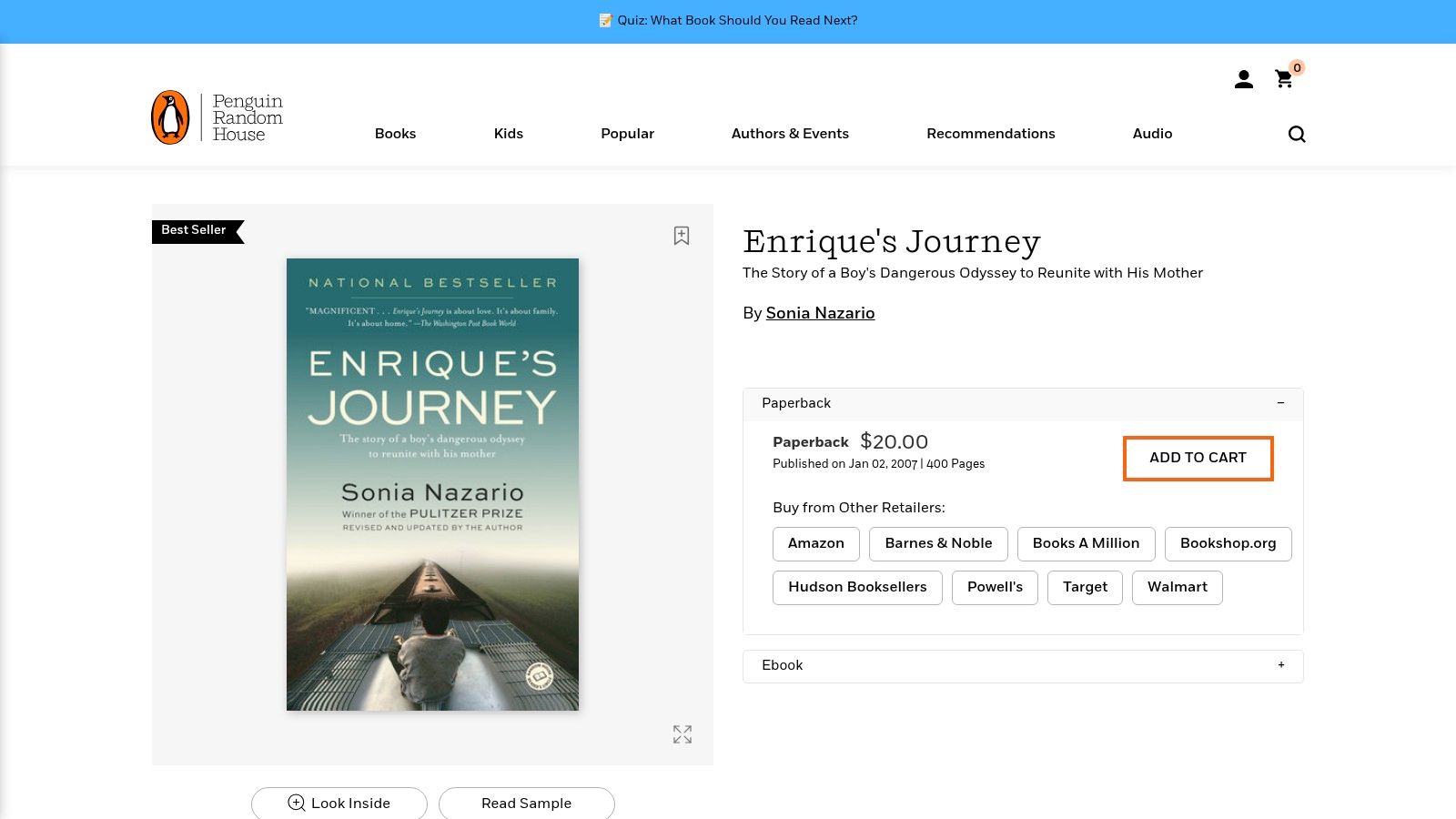
Sonia Nazario's Enrique's Journey remains one of the most useful narrative tools for unaccompanied-minor work and any case involving danger during transit. As journalism, it gives practitioners something memoir sometimes can't. Broader context around route conditions, predation, family separation, and the logic that drives children into movement in the first place.
In office use, this book is particularly effective when teams need to understand why migration risk and reunification longing coexist. It helps attorneys avoid a common mistake. They describe a journey as reckless without fully articulating the conditions that made it thinkable, or necessary, to the child.
Where it earns a place on the shelf
This belongs in practices handling SIJ-related narratives, asylum matters involving children, and hardship cases where the family system has already been reorganized by separation. It also pairs well with more clinically focused discussions of family separation effects, because it shows how danger on the route and attachment disruption interact rather than operate as separate harms.
- Country-conditions framing: Useful for contextualizing what clients may have encountered during transit.
- Minor trauma narratives: Helps staff ask better questions about fear, coercion, hunger, assault risk, and survival decisions.
- Case theory: Supports arguments that a child's presentation may reflect layered trauma, not a single precipitating event.
Its main downside is intensity. Some scenes are graphic, and some clients will do better with first-person memoir than with immersion journalism. For staff training, though, this is often one of the fastest ways to deepen understanding of migration-by-child logic.
6. The Newcomers
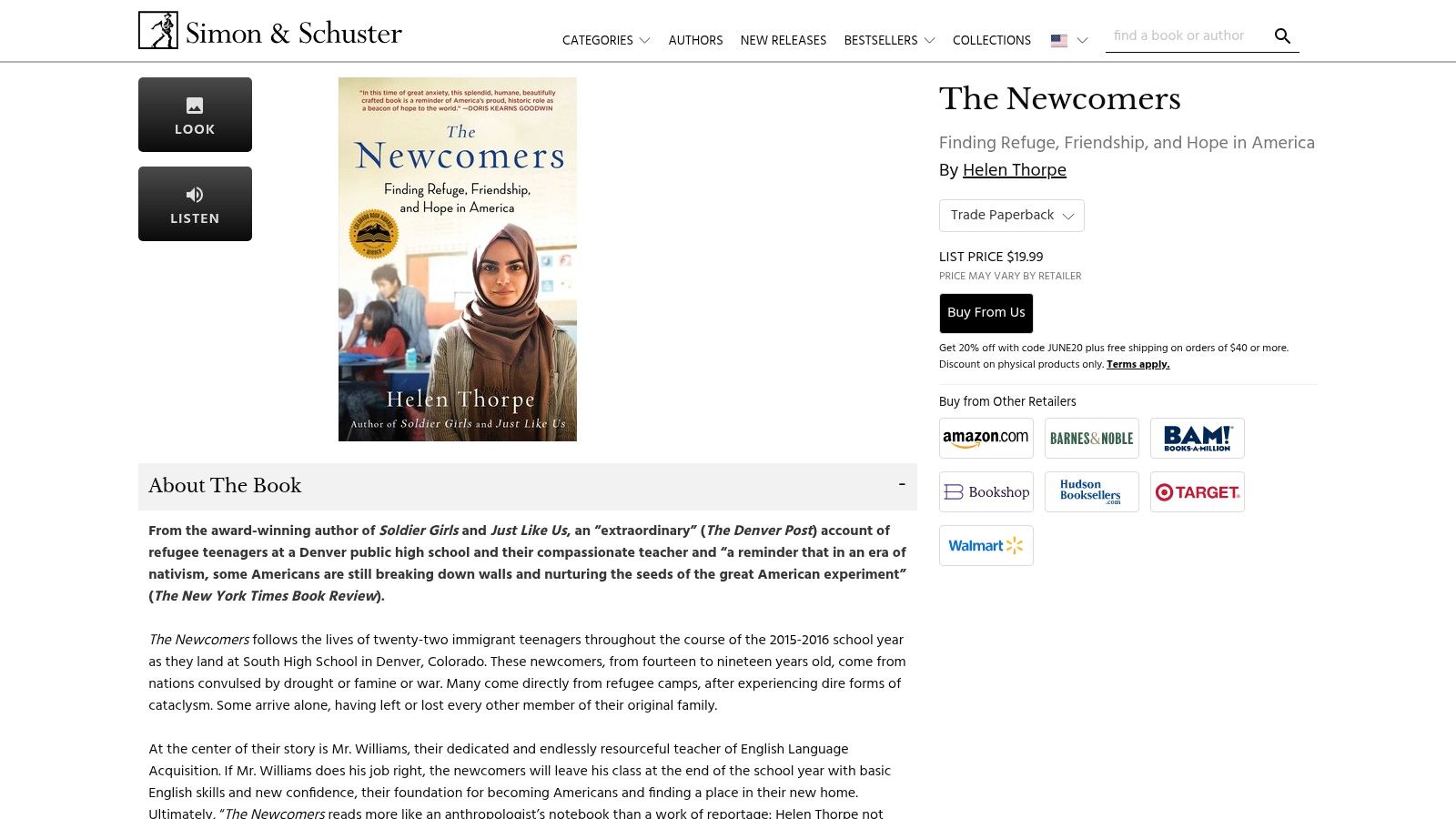
Helen Thorpe's The Newcomers is the best option on this list for understanding what stabilization looks like after displacement. Many books about immigration experience focus on border crossing, illegality, or family rupture. This one pays sustained attention to school, language acquisition, peer relationships, and the adults who create structure after chaos.
That's valuable because legal records often mention school only in passing. In practice, school can be one of the clearest places to document trauma impact and protective factors at the same time. Attendance, withdrawal, learning disruption, social isolation, improvement with support, and reliance on specific adults all matter.
What practitioners can take from it
For clinicians, this book sharpens observations about recovery contexts. It shows that symptom reduction doesn't happen in abstraction. It often depends on routine, translation support, teacher attunement, and community coordination. For attorneys, it offers language for hardship and mitigation narratives that aren't only about loss, but also about what a client has built in a receiving environment.
The trade-off is focus. This is a school-centered lens. If your case turns mainly on adult work exploitation, detention, or procedural barriers inside the legal system, other books on this list will be more directly useful.
Still, I'd keep this one close for any practice that represents refugee and immigrant adolescents. It helps teams document strengths without drifting into unsupported optimism.
A strong psychosocial report doesn't just describe what harmed the client. It identifies what has helped the client function, and what would be lost if that support disappeared.
7. Tell Me How It Ends
Valeria Luiselli's Tell Me How It Ends may be the most strategically useful short book on this list. Its structure matters as much as its content. Luiselli organizes the essay around 40 intake questions used with children facing deportation, and that frame exposes a problem every practitioner eventually encounters. Legal forms require narrative compression at the exact moment trauma makes memory uneven, language thin, and chronology unstable.
For attorneys and clinicians, this is a compact master class in the gap between lived experience and admissible narrative. It's ideal for team training because it keeps attention on process. How questions are asked. What children can answer. What gets omitted. What shame does to recall. Why literal inconsistency doesn't always mean deception.
Best for training and intake design
This is the book I'd assign before revising an intake packet or training staff on child interviewing. It's especially useful if your team needs to think harder about translation, pacing, and the difference between legal sufficiency and human telling.
A broader pattern in immigration literature supports that multi-voice, evidence-oriented approach. Penguin Random House describes Asylum Speakers as a collection of 31 migration stories, and the ACLU reading list identifies The Good Immigrant as a collection of 26 essays by first- and second-generation immigrants in the UK, showing how immigration storytelling now regularly moves beyond a single narrator and across age categories and formats (ACLU's list of stories about immigrants and refugees).
The limitation is depth of individual case development. This is an essay, not a full memoir. If a reader wants long-form immersion in one person's arc, they'll need to pair it with another title. But for legal-adjacent reading, few books are more efficient.
7-Book Comparison: Immigration Narratives
| Title (Author) | Reading complexity | Resource requirements | Expected outcomes | Ideal use cases | Key advantages |
|---|---|---|---|---|---|
| The Undocumented Americans, Karla Cornejo Villavicencio | Nonlinear, essayistic; emotionally intense | Available hardcover/paperback/ebook/audio; moderate length | Nuanced, ground‑level portraits and cumulative trauma context | Affidavits, psychosocial sections, evaluator reference | Deep, dignity‑centered portraits; award‑recognized reporting |
| Dear America, Jose Antonio Vargas | Straightforward, highly accessible memoir | Print/ebook/audio; concise, easy to assign | Illustrates hypervigilance, identity strain, secrecy costs | Court education, team workshops, client primers | Readable discussion‑starter that demystifies chronic stress |
| Beautiful Country, Qian Julie Wang | Child's‑eye narrative; evocative and accessible | Hardcover/ebook/audio; memoir length | Developmental impacts of fear, poverty, intergenerational effects | Pediatric hardship, VAWA childhood exposures, waiver support | Strong material for psychosocial and educational impact summaries |
| The Distance Between Us, Reyna Grande | Chronological, clear storytelling | Paperback/ebook/audio; also young‑readers edition | Attachment disruption, separation and reunification trauma | Asylum cases, hardship narratives, declarations | Chronological clarity useful for citation; balances trauma and resilience |
| Enrique's Journey, Sonia Nazario | Immersive investigative journalism; graphic at times | Multiple formats; includes photos, educator resources | Detailed country‑conditions and journey‑risk context | Unaccompanied‑minor cases, risk‑of‑return arguments, country evidence | Rich factual detail and widespread adoption in education/community programs |
| The Newcomers, Helen Thorpe | Longitudinal, school‑centered reporting; moderate complexity | Paperback/ebook/audio; single‑community focus | Insights on language acquisition, school‑based recovery, integration | Hardship waivers, asylum psychosocials, mitigation narratives involving youth | Practical depiction of school supports and protective factors |
| Tell Me How It Ends, Valeria Luiselli | Concise essay framed around intake questions; highly teachable | Print/digital; short, quick read | Clarifies how stories map to legal forms, memory gaps, language barriers | CLEs, attorney/clinician trainings, client intake education | Compact, courtroom‑adjacent structure ideal for team training and discussion |
From Reading to Practice Integrating Narrative into Your Workflow
How do you turn a powerful immigration narrative into evidence that survives scrutiny from USCIS or an immigration judge?
Start by using these books as pattern-recognition tools, not as substitutes for proof. In practice, good reading improves interviews. Attorneys ask narrower follow-up questions about timing, fear, caregiving, school disruption, work exploitation, and family role changes. Clinicians get a clearer view of symptom development, functional decline, and the difference between a client's public story and the private cost of living through it.
That shift matters in case preparation. Weak records often describe events without tracing impact across months or years. They also slip into generalized trauma language that sounds clinical but detached from the client's actual life. Stronger narrative work stays concrete. It names attachment disruption, secrecy, parentification, developmental interference, hypervigilance, shame, and protective factors in terms that can be documented, tested against the record, and tied to the legal standard at issue.
Each genre helps with a different task. Memoir often sharpens affidavit drafting because it shows sequence, voice, and lived consequence. Investigative reporting helps build country-conditions framing and risk context. Short-form essays are useful for team training because they reveal how legal intake questions shape what gets said, omitted, or misunderstood. Used well, these books give practitioners better language for interviews, declarations, hardship summaries, and psychological evaluations.
They also help prevent a common mistake. Practitioners sometimes force clients into a single familiar storyline, such as persecution, family separation, or economic necessity, even when the situation encompasses several overlapping pressures. The broader field of immigration writing is useful for that reason. Clients rarely arrive as one narrative type, and case theory improves when the record reflects that complexity.
Reading alone does not organize evidence. The practical step is translation from narrative into documentation: chronology, corroboration, symptom history, functional impairment, and nexus to the relief sought. A specialized psychological evaluation can do that work when mental health impact, trauma exposure, developmental history, or hardship are central to the case. It turns lived experience into a clinically grounded report that supports declarations and legal argument instead of floating beside them.
Good collaboration closes the gap between intake and filing. When attorneys and clinicians work from the same narrative frame, the client's account stays consistent, specific, and better supported.
If you need to turn lived experience into evidence that USCIS or an immigration judge can effectively use, Pro Psychological Analysis helps bridge that gap. PPA partners with attorneys, nonprofits, and immigrant-serving teams to produce specialized psychological evaluations for asylum, T visa, U visa, VAWA, and extreme hardship waiver cases, with clinically rigorous, HIPAA-compliant reports designed for legal strategy and filing deadlines.