
You may be in one of two situations right now. An attorney has a strong immigration case on the facts, but the record still doesn't fully show what trauma, abuse, fear, or family separation has done to the person living through it. Or a client has already tried to explain those experiences in declarations, therapy notes, or brief medical records, and none of it yet translates cleanly into the legal standard the case must satisfy.
That's where clinical psychology san diego becomes more than a directory search. In immigration practice, the issue usually isn't whether distress exists. The issue is whether the psychological evidence is documented in a way that is clinically sound, legally relevant, and persuasive under scrutiny. A proper forensic evaluation can connect symptoms, history, functioning, and trauma patterns to the exact question USCIS or the immigration court needs answered.
Table of Contents
- Why Immigration Cases Need Specialized Clinical Psychology in San Diego
- Understanding the Role of a Medicolegal Psychological Evaluation
- Psychological Evaluations for Specific Immigration Cases
- Meeting USCIS and Court Admissibility Standards
- Your Step-by-Step Guide to the Evaluation Process
- Inside Your Comprehensive Psychological Report
- Frequently Asked Questions for Attorneys and Clients
Why Immigration Cases Need Specialized Clinical Psychology in San Diego
San Diego has no shortage of clinical psychology talent. The primary challenge is fit. Many people searching clinical psychology san diego don't need a university training page, a lab description, or a general therapy clinic. They need a psychologist who understands how to document trauma for asylum, VAWA, T visa, U visa, and hardship cases in a format that serves a legal record.
That mismatch shows up online. Searchers often need trauma-informed evaluation services for immigration matters, but local results are largely geared toward training programs or academic research rather than forensic documentation that addresses admissibility and credibility concerns, as noted by the SDSU clinical program overview. Attorneys feel that gap immediately. Clients feel it when they're told to “get a letter” and have no clear guidance on what kind of letter will help.
A standard therapy letter usually isn't enough. Treatment notes are written to support care. A forensic immigration report is written to answer a legal question using clinical methods. Those are different tasks, and they produce different documents.
Practical rule: If the report doesn't clearly connect the person's history, symptoms, functional impact, and diagnosis to the legal issue in the case, it probably won't carry the weight the attorney needs.
In San Diego, that distinction matters because this is a highly developed clinical market. Lawyers can find many qualified mental health professionals, but not every qualified therapist is trained to prepare a medicolegal report that will hold up in a contested immigration setting.
For immigration practice, specialized evaluation work helps in several ways:
- It translates trauma into evidence. The report explains not just that something happened, but how it affected memory, mood, behavior, fear, attachment, and day-to-day functioning.
- It separates treatment from documentation. The evaluator's role is to assess and formulate, not merely to advocate from a caring clinical relationship.
- It sharpens the legal theory. A strong evaluation often helps counsel show nexus, coercion, abuse dynamics, vulnerability, or hardship with more precision.
- It reduces ambiguity. Courts and adjudicators respond better to organized, evidence-based reasoning than to broad emotional statements.
That's the practical use of clinical psychology in immigration cases. Not as background support, but as disciplined evidence.
Understanding the Role of a Medicolegal Psychological Evaluation

San Diego is one of the U.S. locations with the highest concentrations of Clinical Psychology degree recipients, according to Data USA's clinical psychology profile. That depth matters in immigration work because it supports a local pool of clinicians trained in evidence-based assessment methods used in formal proceedings.
A forensic evaluation is not therapy
A medicolegal psychological evaluation is an assessment performed for a legal purpose. The referral question drives the work. In immigration cases, that question might be whether the person shows psychological effects consistent with persecution, domestic violence, trafficking, qualifying criminal victimization, or extreme hardship to a family member.
Therapy and forensic evaluation can both involve trauma, symptoms, and clinical interviewing. But they are not interchangeable.
A therapist's primary job is treatment. The therapist builds alliance, reduces suffering, and helps the person function better over time. A forensic evaluator acts more like an investigator. The evaluator gathers data, checks for consistency, considers alternate explanations, reviews collateral material, and writes an opinion tied to the legal issue.
That's why many attorneys find it useful to review the broader relationship between mental health evidence and immigration strategy in resources like mental health and immigration. The key point is simple. A report prepared for court or USCIS has to do more than express concern.
What the evaluator is actually doing
The evaluator is assembling an evidence file. That includes a clinical interview, behavioral observations, history taking, record review, and, when appropriate, psychological testing. The final report doesn't exist to “prove the client is a good person.” It exists to answer a focused professional question with clinical reasoning.
Common tasks in a medicolegal evaluation include:
- Clarifying the referral issue. What legal claim is at stake, and what psychological facts would help the adjudicator understand it?
- Documenting symptom patterns. PTSD, depression, anxiety, dissociation, sleep disturbance, panic, shame, cognitive disruption, and functional decline may all be relevant.
- Assessing consistency and context. Trauma narratives often contain fragmented recall, avoidance, or delayed disclosure. Those patterns need careful interpretation, not snap judgment.
- Linking findings to the case. The report must explain why the clinical findings matter legally.
A short overview can also help clients understand the tone and setting of this work before the interview:
The most useful immigration evaluations are objective enough to survive scrutiny and specific enough to advance the theory of the case.
That balance is what many weak reports miss. They're either too vague to matter or too advocacy-driven to sound reliable.
Psychological Evaluations for Specific Immigration Cases
Not every immigration evaluation asks the same clinical question. Two clients may both present with trauma, but the report structure, symptom emphasis, and collateral review will differ depending on the relief sought. Attorneys get better results when they match the evaluation to the case type from the start.
How the clinical question changes by case type
Asylum evaluations usually focus on the psychological impact of past persecution or a well-founded fear of future harm. The report often examines trauma symptoms, avoidance, hypervigilance, intrusive recall, shame, grief, and how those symptoms affect testimony or disclosure. A common strategic issue is explaining why a client may not have narrated events in a perfectly linear way earlier in the case.
VAWA evaluations center on abuse dynamics within an intimate or family relationship. The clinician looks closely at coercive control, isolation, intimidation, trauma bonding, learned helplessness, dependency, and how abuse altered the person's functioning and decision-making. These reports often help clarify why leaving was difficult, why abuse may have been minimized, and how psychological injuries persisted after the relationship.
U visa evaluations usually document the mental health effects of a qualifying crime. The emphasis is often on fear, humiliation, depression, PTSD symptoms, social withdrawal, sleep disruption, mistrust, and the functional consequences of victimization. The clinician also needs to distinguish direct effects of the crime from earlier or unrelated stressors.
T visa evaluations often involve trafficking-specific dynamics. Clinically, these cases may include coercion, threats, chronic trauma exposure, dissociation, survival-based compliance, restricted autonomy, and powerful fear responses to authority or retaliation. The report may help explain behavior that would otherwise be misunderstood, including delayed reporting or continued contact with exploiters.
Extreme hardship waiver evaluations are different. The central question is not only whether someone is distressed, but whether a qualifying relative would face hardship beyond ordinary family separation consequences. That requires a careful analysis of psychological vulnerability, caregiving dependence, medical or psychiatric history, developmental needs, trauma history, and the likely impact of relocation or separation.
A good hardship report doesn't just say separation would be painful. It explains why this family system would be harmed in a clinically significant way.
Quick reference for attorneys
| Case Type | Primary Clinical Focus |
|---|---|
| Asylum | Effects of persecution, trauma formulation, credibility-related symptom patterns, fear of return |
| VAWA | Power and control, abuse dynamics, coercion, psychological injury within the relationship |
| U Visa | Mental health impact of a qualifying crime, functional impairment, victimization-related symptoms |
| T Visa | Trafficking coercion, chronic trauma, compliance under threat, dissociation, vulnerability |
| Extreme Hardship Waiver | Severity of hardship to qualifying relative, psychological dependence, vulnerability, family functioning |
Some trade-offs are worth stating plainly.
- Broad reports often underperform. If the clinician writes generally about trauma but doesn't address the legal standard, the report may read as sympathetic but not probative.
- Overly narrow reports can also fail. If the evaluator chases the legal issue without developing psychosocial context, the opinion may look thin or artificial.
- Collateral records matter differently by case type. Police records may be central in some U visa matters. In hardship cases, school, medical, caregiving, or psychiatric records may matter more.
When choosing an evaluator, attorneys should ask whether the clinician regularly tailors the interview and report structure to the immigration category involved. That question is often more important than whether the provider has general trauma experience alone.
Meeting USCIS and Court Admissibility Standards
A report helps only if it's credible. In practice, that means the evaluation has to show disciplined clinical method, clear reasoning, and careful limits. Immigration judges, officers, and opposing counsel won't treat every mental health document the same way. The report needs to look like the product of a real forensic assessment, not a sympathetic summary.
San Diego's assessment culture is shaped by rigorous training. The SDSU and UC San Diego Joint Doctoral Program in Clinical Psychology has been APA-accredited continuously since 1990 and uses a clinical-science model that integrates research and evaluation, as described by the SDSU clinical doctoral program. That matters because immigration reports are strongest when they follow the same assessment habits. Careful interviewing, differential thinking, and evidence-based formulation.
What makes a report defensible
A defensible immigration evaluation usually includes multiple layers of evidence rather than a single conversation and a conclusion. The clinician may use a detailed clinical interview, trauma-focused questioning, behavioral observations, review of declarations and supporting records, and standardized psychometric instruments when appropriate.
Key features include:
- A clear referral question. The report should identify why the person was evaluated and what legal issue the findings bear on.
- Method transparency. The evaluator should state what was reviewed, what interviews occurred, and what testing was used if any.
- Diagnostic reasoning. If the report includes DSM-5-TR impressions, it should explain how the symptoms support those impressions.
- Attention to alternative explanations. Strong reports consider cultural context, medical factors, prior trauma, and other stressors rather than treating every symptom as proof of one legal narrative.
- A functional analysis. Adjudicators often need to understand how symptoms affect sleep, parenting, concentration, work, memory, safety, and daily behavior.
Clinical note: Generic counseling notes can support a case, but they usually don't replace a structured evaluation that explains methods, findings, and legal relevance.
What weakens a report
Some problems appear again and again in poor immigration evaluations. The most common is role confusion. A clinician writes as an advocate, not an evaluator, and the report loses objectivity. Another is thin methodology. The conclusions may sound strong, but the factual basis is barely described.
Other weak points include:
- Overstatement. Claiming certainty where the data are limited invites skepticism.
- No trauma formulation. Listing symptoms without explaining the pattern leaves the report underdeveloped.
- Missing collateral review. If important records exist and aren't discussed, the report may feel incomplete.
- Poor organization. Even sound findings can get lost in a document that doesn't clearly connect evidence to the legal issue.
For attorneys, the practical takeaway is straightforward. Ask how the clinician gathers data, how diagnostic conclusions are reached, how inconsistencies are handled, and whether the final report is written for legal use rather than treatment alone.
Your Step-by-Step Guide to the Evaluation Process
Most clients are anxious before the first appointment. Many have never done a formal psychological evaluation. Some worry they'll be judged. Others worry they must remember every detail perfectly. A clear process reduces that pressure and helps attorneys coordinate deadlines, declarations, and filing strategy.
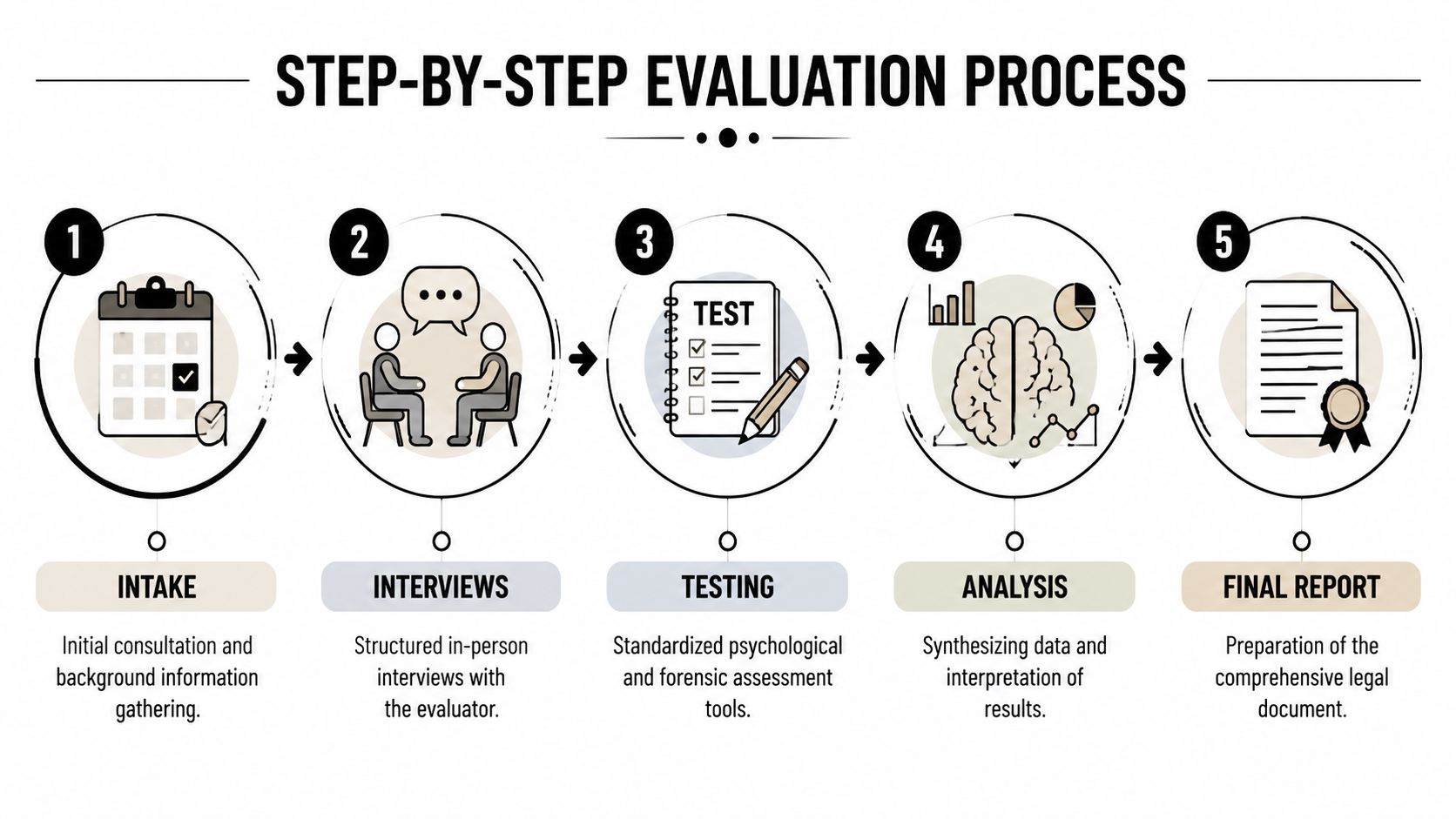
From referral to final report
The process usually starts with the attorney's referral question. That should identify the form of relief, the filing posture, major deadlines, and any known concerns about trauma history, credibility, hardship, abuse, trafficking, or victimization. If the case is multilingual, language needs should be identified immediately.
A typical workflow looks like this:
Referral and case framing Counsel shares the legal issue, procedural deadline, and available records. At this stage, everyone avoids a common mistake: sending a client for an evaluation before defining what the report needs to establish.
Client intake and scheduling
The client receives informed consent information, confidentiality limits, practical instructions, and scheduling details. Some practices offer remote options, which can help with transportation, childcare, work conflicts, or geographic distance. Attorneys comparing options often review practical considerations such as immigration psychological evaluation cost at this stage.Clinical interview and assessment
The evaluator gathers psychosocial history, immigration-relevant history, trauma exposure, symptom development, and current functioning. Depending on the case, this may involve one extended interview or multiple sessions, plus testing when clinically appropriate.Collateral review and analysis
Declarations, medical records, police reports, prior evaluations, school records, affidavits, or attorney summaries are integrated into the clinical formulation. Through this synthesis, the report becomes more than a retelling of the client's narrative.Report drafting and delivery
The evaluator writes the report, ties the findings to the legal question, and sends the final product to counsel through secure channels.
How attorneys can help the process move cleanly
Attorneys can improve the quality of the final report without shaping the clinical outcome. The most useful steps are practical.
- Send the declaration draft if available. It helps the evaluator understand chronology and identify areas that need clinical clarification.
- Flag deadline pressure early. Rush requests are easier to manage at intake than after interviews are complete.
- Identify language needs upfront. Interpreter planning should never be an afterthought in trauma work.
- Share relevant records, not every record. The evaluator needs the materials that inform the referral question, not an unsorted file dump.
PPA is one example of a practice that works in this referral-based model, producing immigration psychological evaluations and reports coordinated with counsel's legal strategy while maintaining independent clinical judgment.
Inside Your Comprehensive Psychological Report
When attorneys ask what they are going to receive, the answer shouldn't be “a letter.” A useful immigration report is a structured medicolegal document. Every section has a purpose, and the sequence matters because the report must show how the clinician moved from data to opinion.

What the attorney receives
A detailed report commonly opens with the referral question. That section states why the evaluation occurred and what immigration issue the findings are meant to inform. The report should also clarify the limits of confidentiality, the nature of the evaluation relationship, and the fact that the document is prepared for legal use rather than treatment.
The body of the report usually includes:
- Relevant background and psychosocial history
- Immigration and trauma history
- Behavioral observations from the interview
- Current symptoms and functional limitations
- Testing results, if testing was used
- Diagnostic impressions
- Clinical formulation and opinion tied to the legal issue
This structure matters because adjudicators need both facts and interpretation. A symptom list alone won't do the job. Neither will a diagnosis with no explanation of how it was reached.
Why structure matters
The strongest section in many immigration reports is the trauma formulation. That is where the clinician explains how the person's experiences, symptom pattern, coping style, memory presentation, emotional regulation, and daily functioning fit together. It gives the legal reader a coherent model.
“The report should answer the question the case is actually asking, not merely describe that the client has suffered.”
That final opinion should stay disciplined. It shouldn't decide the legal case. It should provide a clinical conclusion that helps the judge or officer understand the psychological evidence within the legal framework. When done well, the report becomes one of the clearest pieces of evidence in the file because it organizes human suffering into professional findings without flattening the person behind it.
Frequently Asked Questions for Attorneys and Clients
How is confidentiality handled
Confidentiality should be explained before the evaluation begins. In immigration forensic work, the client needs to understand who will receive the report, what information is being gathered, and the difference between treatment privacy and medicolegal disclosure. Records should be handled through secure systems, and the limits of confidentiality should be stated clearly in writing and discussed verbally.
Are virtual evaluations valid
Virtual evaluations can be appropriate when the case, client presentation, and logistics support that format. They can improve access for people dealing with transportation, childcare, distance, safety concerns, or work constraints. That matters because many people seeking clinical psychology services in San Diego need affordable, culturally responsive options, but information on cost, language access, and telehealth is often scarce, as highlighted by the SDSU community and cultural centers page.
What about cost and referrals
Cost should be discussed transparently before scheduling. Clients and counsel should know what services are included, whether record review is part of the fee structure, how interpreters are handled, and what happens if additional clarification is requested later. Hidden pricing creates stress and delays.
Clients sometimes also ask how to “pass” an evaluation. That's the wrong frame. The purpose is accuracy, not performance. A better starting point is practical preparation, which is why some attorneys share guidance like how to pass a psychological evaluation while explaining that honesty and full context matter more than sounding polished.
For referrals, attorneys should be ready to provide the immigration category, deadline, client contact information, language needs, and the core clinical issue they want assessed. That gives the evaluator enough context to determine fit and schedule the work efficiently.
If you need a clinically grounded immigration evaluation that's written for legal use rather than general treatment, Pro Psychological Analysis provides psychological assessments for asylum, VAWA, T visa, U visa, and extreme hardship cases with coordination responsive to attorney deadlines and case strategy.